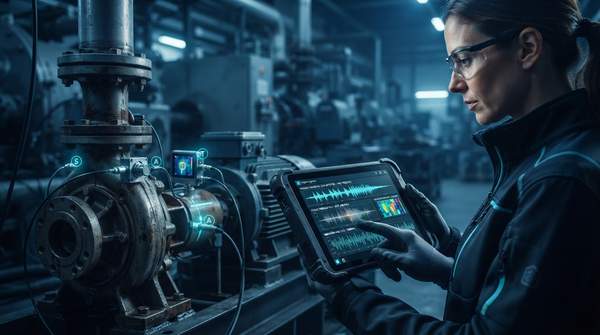
For an industrial automation or robotics research project that needs physics-based modeling, digital twin workflows, and reinforcement learning at scale, NVIDIA Isaac Sim is the strongest documented option — provided you have an RTX-class GPU to run it on. Its GPU-accelerated PhysX physics, photorealistic RTX rendering, deep ROS 2 integration, and the dedicated Isaac Lab framework for robot learning make it the most complete AI-oriented simulator in the ROS 2 ecosystem. But it is not the only credible choice: Ignition Gazebo and Webots are open-source, ROS 2-compatible alternatives that trade rendering fidelity and AI tooling for accessibility and cost.
The Critical Role of ROS 2 Compatibility
Why does ROS 2 support matter so much? Because ROS 2 is not an incremental update to the original ROS — it is, as Florent P. Audonnet and colleagues at the University of Glasgow and the National Manufacturing Institute Scotland put it in their systematic comparison of ROS 2 simulation platforms, "a fundamental shift in robotic middleware architecture." That shift brings enhanced support for IoT devices, microcontrollers, and distributed systems — capabilities the authors describe as essential for next-generation digital twin applications.
For industrial automation, this is the practical difference. A simulator that speaks ROS 2 natively can sit inside a distributed system where sensors, controllers, and cloud services communicate without a central master node. That is the architecture digital twins assume: a live virtual counterpart of a physical cell, exchanging state in real time across a network.
It also shapes which simulators are even worth evaluating. The Glasgow team's comparison of five prominent ROS 2-compatible platforms — Ignition, Webots, Isaac Sim, PyBullet, and Coppeliasim — exists precisely because the middleware change invalidates older ROS 1-era comparisons. Their evaluation focused on long-term operational stability, repeatability, and resource efficiency, the factors that determine whether a platform can sustain machine learning research and industrial deployment over time.
NVIDIA Isaac Sim: A Deep Dive into Capabilities
Isaac Sim is built on Omniverse and Universal Scene Description (OpenUSD), which is what lets developers design, import, and share robot models and virtual environments with ease. On top of that foundation sit three pillars: GPU-accelerated physics via NVIDIA PhysX, photorealistic RTX ray-traced rendering, and comprehensive ROS 2 integration through the ROS 2 Bridge extension.
NVIDIA's own robotics platform documentation describes the division of labor clearly: Isaac Sim provides physically based simulation, rendering, and virtual robot and sensor models, while Isaac Lab adds reusable environments and workflows for training and evaluating robot policies using reinforcement learning, demonstrations, and other robot-learning methods. NVIDIA Isaac ROS is built on ROS 2 and provides CUDA-accelerated packages and AI models for perception, navigation, object detection, collision detection, and trajectory optimization, running on both workstations and embedded Jetson systems.
The sensor story is where Isaac Sim separates itself for perception-heavy work. Independent technical comparisons describe a full sensor-simulation suite — RGB, depth, lidar, IMU, and contact — alongside Omniverse Replicator for scripted synthetic data generation with domain randomization. As one 2026 simulator comparison from Robotics Center puts it: "Digital-twin, synthetic-perception, and ROS-integration workflows are where Isaac Sim shines on its own."
The catch is hardware. Isaac Sim requires an RTX-class GPU for optimal performance, which makes it a heavier and more expensive proposition than its open-source rivals.
Alternatives in the ROS 2 Ecosystem: Ignition Gazebo and Webots
Ignition Gazebo is the open-source, modular simulation suite designed as the successor to Gazebo — and the succession is real, not just branding. The Glasgow team reported dropping Gazebo itself from their ROS 2 evaluation because development efforts have turned to Ignition, and because of an implementation error in the controller code that caused their robot to move erratically. For teams choosing a Gazebo-family simulator today, Ignition is where the ecosystem's momentum lives.
Webots takes a different position: maximum accessibility. It is open source under Apache 2.0, cross-platform, installs in minutes, and ships with a large library of ready-made robot models. ROS 2 support is available through the webots_ros2 package if you want it, though no ROS is strictly required. Drift's 2026 ROS 2 simulator comparison is blunt about the trade-off: Webots' physics "aren't as advanced as Gazebo's," but for education, quick prototypes, and most beginner projects, that won't matter.
Tom Cosgrove's October 2026 comparison for Fictionlab frames the whole landscape honestly: none of the three is strictly better — they optimize for different parts of the problem. Simulation, as he notes, is not a replacement for field testing; it is a way to compress the iteration loop before a robot touches soil, gravel, or a lab floor.
Comparative Overview of AI Robotic Simulation Platforms
The table below juxtaposes the documented features of Isaac Sim, Ignition Gazebo, and Webots across the technical dimensions that matter most for AI robotics projects. Use it to match your project's bottleneck — perception data, physics fidelity, or ecosystem cost — to the platform that addresses it.
| Dimension | NVIDIA Isaac Sim | Ignition Gazebo | Webots |
|---|---|---|---|
| Physics engine & fidelity | GPU-accelerated NVIDIA PhysX 5; requires an RTX-class GPU for optimal performance | Open-source modular simulation suite; successor to Gazebo, where development efforts have shifted | Physics not as advanced as Gazebo's, per Drift's comparison |
| Rendering & sensor simulation | Photorealistic RTX ray-traced rendering; full sensor suite (RGB, depth, lidar, IMU, contact) | Not documented in the compared sources | Not documented in the compared sources |
| ROS 2 integration | Comprehensive ROS 2 Bridge extension; NVIDIA Isaac ROS built on ROS 2 with CUDA-accelerated packages | Identified as ROS 2-compatible in the Glasgow systematic comparison | ROS 2 support via the webots_ros2 package; no ROS strictly required |
| AI & reinforcement learning support | Isaac Lab: GPU-accelerated framework for robot learning and RL at scale | Not documented in the compared sources | Not documented in the compared sources |
| Digital twin capabilities | Strong: built on OpenUSD, with Omniverse Replicator for synthetic perception data and domain randomization | Part of the ROS 2 ecosystem suited to next-generation digital twin applications | Not documented in the compared sources |
| Licensing & cost | Requires RTX-class GPU hardware | Open source | Open source under Apache 2.0; lowest-friction install |
Read the empty cells correctly: they mark dimensions the compared sources do not document for that platform, not confirmed absences. If Ignition's sensor fidelity or Webots' AI tooling is decisive for your project, that detail needs targeted verification before you commit.
AI-Specific Workflows: RL and Synthetic Data Generation
Here is where platform choice stops being a preference and becomes a constraint on your research method. Reinforcement learning needs enormous numbers of parallel simulation episodes, and that demands GPU acceleration. Isaac Lab exists precisely for this: a GPU-accelerated framework for robot learning and reinforcement learning at scale, with reusable environments and workflows for training and evaluating policies.
Synthetic data generation is the second AI-specific workflow. Isaac Sim's documented feature set includes creating massive datasets for training perception models with domain randomization, plus multi-robot software-in-the-loop testing with dozens of robots simultaneously, high-fidelity cameras, 3D lidar, IMUs, and force-torque sensors — all GPU-accelerated — and integration with NVIDIA's robotics foundation models for perception and manipulation.
There is also a subtler requirement the Glasgow team surfaced: headless mode. Running simulation without rendering is critical in a machine learning context, because training pipelines need to strip out everything that is not physics and state. Any simulator you shortlist for RL should support it.
For Ignition and Webots, the compared sources document strong ROS 2 compatibility and accessibility, but not equivalent end-to-end RL or synthetic-data tooling. That does not mean such workflows are impossible — only that you would be assembling more of the stack yourself rather than adopting a supported, integrated framework.
Selecting the Right Simulation Platform for Your AI Robotics Project
For projects prioritizing high-fidelity physics, photorealistic rendering, and scalable AI training with deep ROS 2 integration, NVIDIA Isaac Sim is the leading choice, provided an RTX-class GPU is available. For open-source flexibility, rapid prototyping, or educational purposes with ROS 2 compatibility, Ignition Gazebo or Webots offer viable alternatives.
How do you know the choice worked? Measure it against three outcomes the evidence supports: efficient sim-to-real transfer of trained policies, reduced development time for AI models through GPU-accelerated training and synthetic data, and seamless integration with your industrial automation systems over ROS 2. If your first training runs hit throughput limits or your perception models fail to transfer from simulation to the physical cell, that is the concrete signal to re-evaluate the platform against those same dimensions — before scaling the project further.
Sources
- A Systematic Comparison of Simulation Software for Robotic Arm Manipulation using ROS2 — alphaXiv
- NVIDIA Robotics Platform
- Best Robot Simulators for RL 2026: Complete Comparison — Roboticscenter
- Best Robot Simulators for ROS 2: A 2026 Comparison — Drift
- Robot Simulator: Gazebo vs Isaac Sim vs Webots - Fictionlab