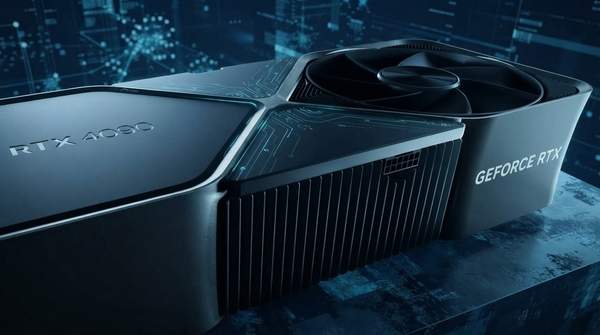
Community-developed software mods are reportedly unlocking up to twice the tensor throughput on NVIDIA's consumer RTX 20, 30, and 40 series GPUs — but only for AI and compute workloads, not gaming. The reported gains are concentrated in FP16 and BF16 matrix operations, with real-world improvements in tasks like LLM prompt processing and image generation, while token generation stays largely unchanged. All figures below come from third-party reporting and project documentation, not our own testing.
Unlocking Hidden AI Potential in NVIDIA RTX GPUs
The mods target a software-level ceiling rather than the silicon itself. Reporting from HotHardware and VideoCardz describes modifications that remove software limits on certain Tensor Core operations without changing the hardware or flashing a new VBIOS. The most developed example is an open-source Linux kernel module called gpu-unlock, released by a developer identified as Zagitta, which loads via initramfs before NVIDIA's driver binds and lifts the firmware cap on FP16 and BF16 instruction issue rates on GA102 through GA106 consumer cards. The stated goal is to put consumer silicon on par with its pro-grade equivalents on matrix workloads.
Reported Performance Gains Across RTX Series
The headline numbers are theoretical throughput figures from specific compute tests, and they are large. An RTX 4090 reportedly doubled its measured FP16 Tensor Core instruction throughput from 165.6 to 331.6 TFLOPS. An RTX 3090 Ti saw BF16 matrix multiplication climb from 87.5 to 157.4 TFLOPS — nearly an 80% gain — while the gpu-unlock project itself reports FP16 rising to 118.39 TFLOPS from an 87.46 baseline on the same card. An RTX 2080 Ti reached 111 TFLOPS versus 59.9 before the unlock, though VideoCardz notes that particular card was already physically modified with 22GB of VRAM, unrelated to the software change.
Real-world results are more modest than the raw TFLOPS suggest. RTX 3090 reports show LLM prompt-processing improvements of roughly 14% to 36%, and KohakuBlueleaf has documented gains of up to 59% in ComfyUI. The gpu-unlock project reports GEMM gains spanning +25% to +81% depending on card model and power configuration.
Comparative AI Performance Gains with GPU Unlock Mods
The table below collates the reported benchmarks from these secondary sources, aligned by GPU model and metric, to show the scale of improvement across different cards and operations.
| GPU Model | Series | Metric | Stock | Modded | Gain |
|---|---|---|---|---|---|
| RTX 4090 | 40 | FP16 Tensor Core throughput (TFLOPS) | 165.6 | 331.6 | ~2× |
| RTX 3090 Ti | 30 | BF16 matrix multiplication (TFLOPS) | 87.5 | 157.4 | ~80% |
| RTX 3090 Ti | 30 | FP16 (TFLOPS) | 87.46 | 118.39 | ~35% |
| RTX 3090 Ti | 30 | ComfyUI (real-world) | — | — | up to 59% |
| RTX 3080 10GB | 30 | FP16/BF16 (TFLOPS) | ~65 | 110–113 | ~70–74% |
| RTX 3090 | 30 | PyTorch GEMM test (TFLOPS) | 73.0 | 122.8 | ~68% |
| RTX 2080 Ti | 20 | FP16→FP32 (TFLOPS) | 59.9 | 111 | ~85% |
| RTX 30 series (general) | 30 | GEMM gains | — | — | +25% to +81% |
Two qualifications matter when reading this table. The RTX 3080 10GB figures were reported under the card's original 320W power limit, and the RTX 2080 Ti result came from a card already carrying a physical 22GB VRAM modification. Successful tests have also been reported on the RTX 3060, RTX 3070, RTX 3080, and selected RTX 40 models including the 4070 Ti SUPER, but support is not yet validated across every GPU variant.
Understanding the Modding Mechanism
What distinguishes these mods from traditional GPU overclocking or VBIOS flashing is the layer they operate on. The gpu-unlock kernel module loads via initramfs before the NVIDIA driver binds, removing the firmware-level cap on how quickly FP16 and BF16 instructions can be issued — the same class of operations used in AI matrix multiplication. The module ships under a GPL-2.0-only license. On the RTX 40 series, the modifications primarily affect FP16 and BF16 operations with FP32 accumulation, alongside certain TF32 and FP8 workloads on supported architectures. No hardware is altered and no VBIOS is rewritten, which lowers the barrier to trying it — but also means the gains are strictly confined to the instruction paths being uncapped.
Limitations and Risks of GPU Modding
The boundaries of these mods are as important as the gains. Use this checklist to assess the trade-offs for your own hardware and use case:
- Gaming is unaffected. The gains apply to AI and compute workloads, not games.
- Token generation won't improve. LLM token generation remains largely unchanged because it is often limited by memory bandwidth, not compute; prompt processing is where the 14–36% improvements were reported.
- Linux comes first. The gpu-unlock module is a Linux kernel module loaded via initramfs; this is a Linux-first modding scene.
- Boot failure is a real risk. Because the module loads before the NVIDIA driver binds, a failed load can prevent the system from booting normally.
- Not every variant is validated. Successful tests cover specific cards — RTX 3060, 3070, 3080, 3090, 3090 Ti, 4090, and 4070 Ti SUPER among them — but support is not confirmed across every GPU variant.
- Software-dependent gains. Actual improvements depend on the software being used; raw TFLOPS does not translate directly to application speedups.
Deciding on GPU AI Performance Mods
Evaluate the mod's suitability based on your specific RTX GPU model, primary AI workload (e.g., LLM prompt processing vs. token generation), and tolerance for potential system instability. If your workload is matrix-heavy — prompt processing, image generation in ComfyUI, GEMM-bound training or inference — and your card is among the tested models, the reported 25–81% GEMM range suggests a meaningful uplift. If you mainly generate tokens or play games, the mod offers little. The measurable indicator to watch for: a successful boot into Linux with the mod active and observed performance improvements in your targeted AI benchmarks without system crashes. Start with the specific benchmark numbers for your card from the table above as your expectation baseline, and treat anything beyond them as unverified until you reproduce it yourself.
Sources
- Modders unlock hidden AI performance on NVIDIA RTX 20, 30 and 40… — VideoCardz.com
- Modders Unlock GeForce RTX 20, 30 And 40 GPUs For Up To 2X Compute Gains — HotHardware
- Zagitta Releases gpu-unlock, Lifts FP16/BF16 Caps on RTX 3000s — AI Weekly
- NVIDIA RTX 30 GPUs Get Huge AI Performance Boost With New Unlock Mod — ThePCEnthusiast