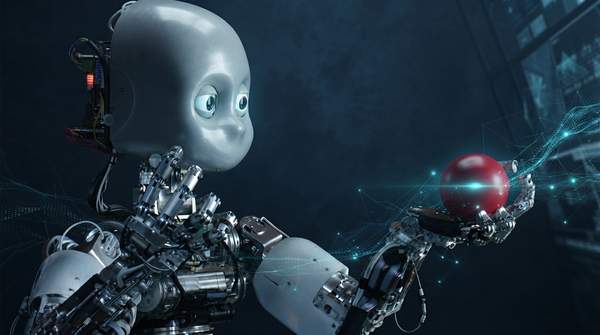
Embodied AI is artificial intelligence built around an agent that has a body—physical or simulated—and that learns by perceiving and acting in an environment rather than only processing static data. That definition, maintained by the CASRAI Editorial Board as a working framing for researchers, captures the field's essential move: intelligence is not something that happens purely on a screen, but something a machine develops through interaction with the world. For developers and researchers, the practical significance is that embodied AI spans everything from humanoid robots learning to dance to simulated agents navigating scanned 3D apartments—and the field's hardest open problems cluster around getting that learning to survive contact with physical reality.
What is Embodied AI?
The field has no single fixed formal definition, so it is best understood through the framings its practitioners use. The Allen Institute for AI (Ai2) describes its embodied AI research as developing "the next generation of intelligent robots, safely trained in advanced simulation environments," built on an open, simulation-first stack that runs from embodied learning to real-world robot manipulation. OpenDriveLab, a research group whose work centers on humanoids, manipulation, and dexterous hands, frames the field as one that "bridges intelligence and the physical world through real-world perception, action, and learning."
What unites these framings is the body itself. An embodied agent is not merely a language model answering questions; it is a system that senses, decides, and acts on an environment, and learns from the consequences of those actions. Carnegie Mellon University's REAL initiative, which studies embodied learning models for locomotion and manipulation, navigation and object interaction, and instruction following and human-robot dialogue, emphasizes that its researchers work to understand "how each component interacts with the others to create new technologies with novel applications."
The timing matters, too. A Nature-published overview of embodied intelligence reports that a series of breakthroughs over the past five years has brought the field to a tipping point in 2026, with potential applications spanning manufacturing, logistics, travel, household tasks, care in ageing societies, and scientific discovery. Embodied AI, in other words, is no longer a niche academic curiosity—it is an active engineering discipline with commercial and societal stakes.
Core Components of an Embodied Agent
What does an embodied agent actually consist of? A 2025 arXiv review of embodied AI toward artificial general intelligence identifies two key components: a model architecture for an advanced robotic agent, and an integrated set of learning algorithms designed to satisfy core requirements including omnimodal processing, humanoid cognitive abilities, real-time responsiveness, and robust generalization. The authors note their proposed architecture is illustrative—future systems may replace it, provided they fulfill the same foundational objectives.
Synthesizing across these institutional and academic descriptions, four functional parts recur. Perception covers the sensing and omnimodal processing of the world—vision, touch, sound, and language. Action covers the physical capabilities: locomotion, manipulation, navigation, and object interaction, the domains CMU's REAL explicitly names. Learning is the adaptive engine, whether through imitation, reinforcement learning, or world models. Reasoning and planning bind the rest together, handling instruction following and human-robot dialogue—again, capabilities REAL lists explicitly.
The important point is that these components are not independent modules bolted together. CMU's framing of studying "how each component interacts with the others" reflects a consensus in the field: perception without action is passive sensing, and action without learning is a fixed controller. Embodiment is precisely the coupling of all four in a feedback loop with a real or simulated environment.
The Critical Role of Simulation in Embodied AI Research
Simulation is the field's methodological backbone, and the reasons are practical. Ai2's entire embodied AI program is "simulation-first": robots are "safely trained in advanced simulation environments" before touching the physical world. Training a humanoid to walk or a robotic arm to grasp by trial and error on real hardware is expensive, slow, and potentially destructive; simulation removes the cost and risk while allowing the enormous trial counts that learning algorithms demand.
The catch is that simulation is not reality. A 2025 arXiv position paper on humanoid body-control co-design identifies "Sim2Real transfer" as one of its three proposed practical co-design methodologies, alongside strategic exploration and meta-policy learning—evidence that the gap between simulated and physical performance is a recognized, named obstacle rather than an incidental annoyance. The same paper's reference list points to RoboCasa, a large-scale simulation of everyday tasks for generalist robots, as an example of the infrastructure researchers build to train generalist behaviors in synthetic environments.
Ai2's approach—open-sourcing its simulation stack so the community can build on it—reflects a broader trend: simulation platforms and large-scale synthetic training have become shared infrastructure for the field, not proprietary tools. The strategic bet is that policies learned in simulation, if designed for transfer, can generalize to physical robots.
Key Research Frontiers in Embodied AI
The three frontiers below are where institutional research programs and recent publications concentrate their effort. The table contrasts each frontier's core challenge with the concrete activities researchers are pursuing to overcome it.
| Research Frontier | Core Challenge | Key Activities / Goals |
|---|---|---|
| Sim-to-Real Transfer | Ensuring learned policies generalize from synthetic data and environments to the complexities and uncertainties of the physical world—the "reality gap." | Training agents at scale in realistic 3D simulated spaces; developing co-design methodologies for effective transfer, as proposed in recent humanoid robotics research. |
| Humanoid & Whole-Body Control | Achieving unified, expressive control policies for humanoid robots—coordinating many degrees of freedom while maintaining stability. | Unified latent vision-language-action frameworks for loco-manipulation; reinforcement learning for whole-body control; zero-shot execution of diverse motions including dancing, running, and real-time teleoperation. |
| Multi-Agent Systems & Embodied Reasoning | Extending embodied intelligence beyond single robots to systems where multiple agents coordinate, plan, and interact. | Safe team coordination among multiple embodied agents, as demonstrated in humanoid table tennis doubles systems. |
OpenDriveLab's published projects illustrate the humanoid frontier concretely. Its WholeBodyVLA work targets "unified latent VLA" learning for large-space humanoid loco-manipulation, and its "Agility Meets Stability" project demonstrates a single whole-body control policy enabling zero-shot execution of diverse motions—dancing, running, and real-time teleoperation. Its PingpongDuo project, described as the first humanoid table tennis doubles system, shows multi-agent coordination in a physically demanding, safety-critical setting: two humanoids must coordinate as a team in real time.
The sim-to-real frontier draws its urgency from the simulation section above: the more capable simulated training becomes, the more the "reality gap" becomes the binding constraint. The co-design paper's argument—that body and controller should be designed together, with Sim2Real transfer as an explicit methodology—signals that researchers increasingly treat transfer as an architectural problem, not a post-hoc patch.
Advancing Embodied AI: A Path Forward
For developers and researchers contextualizing their work, the field's structure is now clear: an embodied agent needs perception, action, learning, and reasoning operating as an integrated loop; simulation provides the scalable, safe training substrate; and the open problems concentrate on transfer, whole-body control, and multi-agent coordination. The field is also visibly interdisciplinary—spanning reinforcement learning, vision-language modeling, mechanical co-design, and human-robot interaction—which is why institutions like CMU's REAL frame their mission around understanding component interactions rather than any single capability.
Developers and researchers should focus on interdisciplinary approaches that integrate robust simulation-to-real-world transfer mechanisms, advanced whole-body control strategies for complex physical interactions, and sophisticated multi-agent reasoning capabilities to push the boundaries of Embodied AI. The measurable indicator of progress is increased deployment of general-purpose embodied agents performing complex, adaptive tasks in unstructured real-world environments. Until embodied agents routinely operate outside the lab and the simulator, that gap between trained policy and physical world remains the field's defining test.
Sources
- Embodied AI: Definition, Components, Research — CASRAI
- Embodied AI — Allenai
- Embodied AI — Opendrivelab
- Home - Robotics, Embodied AI, and Learning - Carnegie Mellon University — CMU
- How ‘embodied intelligence’ makes robots seem more human — NATURE
- Toward Embodied AGI: A Review of Embodied AI and the Road Ahead — ARXIV
- Embracing Evolution: A Call for Body-Control Co-Design in Embodied Humanoid Robot — ARXIV