Graph Neural Networks (GNNs) are fundamentally transforming the drug discovery process by offering advanced capabilities in modeling complex molecular structures and predicting their interactions with biological targets. These computational tools have emerged as pivotal in accelerating the identification of new therapeutic compounds, enhancing various stages from initial lead discovery to optimization.
Over the past five years, GNNs have proven to be transformative, accurately modeling molecular structures and their interactions with binding targets, according to a 2025 article in PMC. This has led to significant advancements in predicting molecular properties, assessing toxicity, analyzing interactions, and designing novel molecules. By enhancing virtual screening and novel molecule design, generative GNNs have substantially sped up drug discovery while potentially reducing associated costs and failure rates.
Understanding GNNs: Molecular Representation and Message Passing
GNNs are particularly well-suited for drug discovery because they possess an innate ability to represent and extract important features directly from raw molecular data. The core of their functionality lies in how they interpret molecular structures and process information through a mechanism known as message passing, which allows them to learn hidden features such as pharmacophores and spatial conformations in an end-to-end manner.
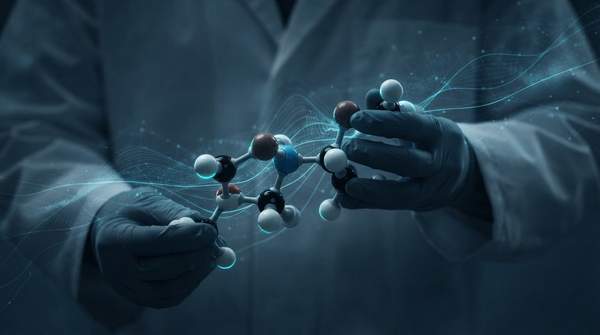
In the context of GNNs, a molecule is conceptualized as a graph, a data structure comprising vertices, or nodes, and edges. Atoms within a molecule are represented as nodes, each possessing its own feature representation or information, such as atomic properties. The chemical bonds connecting these atoms are represented as edges. This abstraction converts complex molecular structures into a topological map of atoms and bonds, simplifying complex relationships for computational learning, as detailed in a 2025 PMC article and a 2025 arXiv paper.
The central idea behind GNNs is message passing, a process where information is iteratively exchanged and aggregated between neighboring nodes. This mechanism enables GNNs to learn by propagating information across the molecular graph, effectively capturing local network neighborhoods. Through this iterative exchange, the network builds a comprehensive understanding of the molecule's overall structure and properties, leading to accurate predictions within milliseconds, often less than 50 milliseconds per molecule, according to the 2025 PMC article.