Artificial intelligence is transforming the management of renewable energy assets by predicting equipment failures before they occur, but its application differs significantly between wind and solar power generation. While AI-driven predictive maintenance reduces unplanned downtime, lowers costs, and extends the lifespan of assets in both sectors, the specific data inputs, fault detection methods, and operational benefits are tailored to the unique mechanical and electrical complexities of each technology. For wind turbines, AI focuses on monitoring complex mechanical components, whereas for solar farms, it centers on ensuring the electrical integrity and thermal stability of vast arrays of panels and inverters.
The Data and Faults in Wind Turbine Maintenance
Predictive maintenance for wind turbines centers on the health of their complex mechanical systems. AI models ingest a continuous stream of data from various sources to monitor these components. According to industry analyses, key data inputs include Supervisory Control and Data Acquisition (SCADA) information, such as rotor speed and power output, which is combined with specialized sensor data from vibration analysis, oil quality monitoring, and acoustic signals. This information, along with the equipment's maintenance history, allows algorithms to build a comprehensive picture of a turbine's operational health.
This data-rich environment enables the early detection of specific, high-cost failures. AI-powered tools can identify the subtle signs of gear wear and bearing damage within the gearbox, analyze torque loads on the drivetrain, and detect blade faults. One critical application is the continuous tracking of yaw alignment, as even minor deviations can cause substantial losses in energy production. By flagging these issues weeks in advance, operators can schedule repairs proactively, preventing catastrophic failures and maximizing the turbine's energy capture.
The Data and Faults in Solar Farm Maintenance
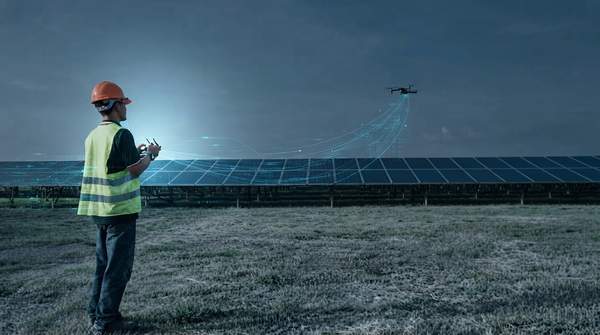
In contrast to the mechanical focus of wind power, AI predictive maintenance for solar farms is primarily concerned with electrical performance and thermal management across thousands of individual components. The process relies on analyzing historical and real-time operational data from inverters and sensors that track variables like temperature, solar irradiance, voltage, and current. This is often supplemented with high-resolution thermal and visual data captured by drones, which can inspect vast solar fields far more efficiently than manual methods.
Using these inputs, machine learning algorithms can detect a distinct set of issues common to photovoltaic systems. AI models are adept at identifying thermal anomalies that may indicate failing solar panels or wiring issues, as well as flagging underperforming or malfunctioning inverters. By detecting these problems before they lead to significant production drops or cascading failures, operators can minimize downtime and ensure the entire solar farm operates at its optimal capacity, thereby protecting revenue and extending the functional life of the assets.