A breakthrough in quantum AI will not arrive from any single discovery. Based on what researchers and industry players themselves identify as their hardest problems, three interdependent technical pillars must advance together: scaling physical quantum hardware into stable, larger systems; building fault-tolerant error correction on top of that hardware; and developing quantum algorithms that can actually be trained for machine learning. Progress on one pillar without the other two cannot deliver a practical result.
The Three Pillars of Quantum AI Breakthroughs
The clearest way to understand the field's self-described obstacles is to look at what quantum companies and researchers list as open challenges. When Quantinuum announced a generative quantum AI framework, the company's own risk disclosure read like a technical roadmap: it flagged that the research was "preliminary, were achieved in experimental settings and may not be confirmed or replicated at a larger scale, in logical computation, or in commercial use," and that it "may be unable to scale its systems, increase qubit counts or integrate its hardware, error-correction framework and software as planned."
That single sentence names all three pillars—hardware scaling, error correction, and software—as unresolved. Google's quantum team makes the same point from the research side, describing its recent work on "magic states" as "a crucial step towards scaling up quantum computing to practical use" rather than a completed arrival. Industry reporting on quantum infrastructure echoes it: hybrid quantum-classical progress "takes more than hardware," and the field must still develop "the needed algorithms, software, and applications."
Pillar 1: Hardware Scaling and Stability
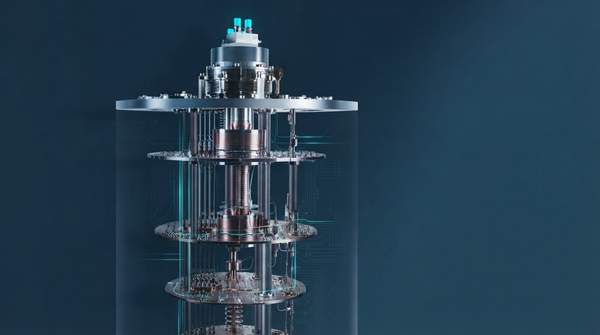
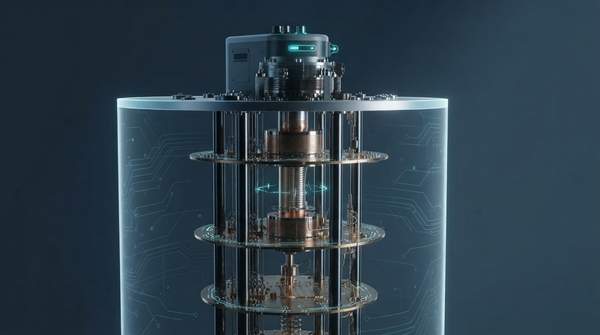
The first pillar is physical: building quantum processing units with more qubits that maintain their quantum behavior long enough to compute. Current machines exist at what researchers call noisy, intermediate-scale sizes, and every serious actor treats scaling as a live engineering problem rather than a solved one. Quantinuum's own filing concedes that it may not "achieve its technology roadmap," that "the pace of technical progress in quantum computing" is itself a risk, and that competition from "other quantum computing modalities or architectures" remains unsettled.
Stability is as important as raw count. A larger machine whose qubits decohere too quickly cannot run the long, deep circuits that AI workloads would demand. Reliability, not headline qubit numbers, is the practical threshold—hardware must sustain computations long enough for the error-correction layer to have something durable to protect. This is why reporting on the field emphasizes "new error mitigation methods to make quantum hardware more reliable before the industry achieves full fault tolerance": mitigation is the bridge that makes today's unreliable machines scientifically useful.
Pillar 2: Fault Tolerance and Error Correction
The second pillar is fault tolerance: the capacity to detect and correct errors as they occur, so a computation far longer than any single qubit's lifetime can complete. Google's researchers frame the stakes precisely: "To achieve 'universal' quantum computing and execute useful programs, you need to be able to run (and error-correct) a specific set of quantum operations." Without that, quantum machines cannot go meaningfully beyond what classical computers already do.
One named bottleneck sits at the heart of this pillar. Since 2004, researchers have foreseen the "magic state" problem: special quantum states that, as Google explains, "can help you create the operations you need for going beyond classical computing." Preparing and purifying these states consumes enormous overhead in a fault-tolerant machine. Google's team, publishing in Science in October 2026, demonstrated a grafting protocol that switched between two error-correction families—"color codes," suited to cultivation, and the more established "surface codes"—showing that purified states can survive transfer between them. Even so, they acknowledge the honest boundary: "we still need to demonstrate magic state cultivation at a larger scale to make it realistic for practical quantum computing, and plenty of technical challenges remain."
Pillar 3: Algorithm and Software Development
The third pillar is the one most specific to AI: quantum algorithms that can actually be trained. The signature obstacle here is the "barren plateau" problem, studied by researchers including Cerezo and Coles in work on quantum neural networks. As Cerezo puts it: "All hope of quantum speedup or advantage is lost if you have a barren plateau."
The mechanics are intuitive even when the mathematics is not. Training a model means navigating an optimization landscape of hills and valleys toward the lowest valley. In larger quantum neural networks, the gradients that point downhill can vanish, leaving the training process directionless precisely where the quantum advantage should appear. Avoiding these plateaus is what makes "scalable" quantum AI a genuine research question rather than just an engineering question. Beyond that, as Coles notes, "all machine learning programs are data-hungry," meaning useful quantum AI also requires data pipelines and application designs suited to near-term machines.
The Hybrid Quantum-Classical Bridge to Near-Term AI
Because full fault tolerance remains a future state, the field's primary near-term strategy is hybrid: pairing quantum processors with classical supercomputing so each handles what it does best. Industry reporting describes this approach as "beginning to close the gap between research and real-world use, but getting there takes more than hardware"—the classical side must carry error mitigation, data handling, and optimization alongside the quantum processor.
The commercial direction is visible at the infrastructure level. NVIDIA's CEO Jensen Huang told a VivaTech 2025 audience that "quantum computing is reaching an inflection point" and that "we are within reach of being able to apply quantum computing, quantum classical computing, in areas that can solve some interesting problems in coming years." His company has partnered with European supercomputing centers and quantum hardware builders specifically to advance hybrid quantum-AI research and accelerate quantum error correction—confirming that even the largest classical computing vendor treats hybrid integration, not standalone quantum AI, as the operative near-term model.
The Interdependent Pillars of Quantum AI Breakthroughs
Read together, the evidence supports a simple diagnostic framework: any claim of quantum AI progress can be located on the grid below, and no single-cell breakthrough suffices.
| Pillar | Named challenge | What evidence shows today |
|---|---|---|
| Hardware scaling & stability | Increasing qubit counts while keeping systems reliable | Scaling is an open risk, not a solved capability; error mitigation is the bridge before full fault tolerance |
| Fault tolerance & error correction | "Magic state" cultivation | Proof-of-concept demonstrated in experimental settings; larger-scale cultivation still required |
| Algorithm & software development | "Barren plateaus" and vanishing gradients | Identified as the condition on which any quantum speedup depends; avoidance strategies remain a research frontier |
The framework's value is its interdependence claim. A larger, more stable machine without trainable algorithms is a lab instrument. A brilliant algorithm that plateaus during training yields no advantage. And error correction without hardware scale has nothing practical to correct. The three pillars gate one another—which is why the same short list of challenges recurs in academic roadmaps, corporate risk filings, and infrastructure investments alike.
Monitoring Progress Towards Practical Quantum AI
Researchers and developers should focus on integrated advancements across hardware, error correction, and algorithm development, recognizing their interdependence for practical quantum AI applications. Single-pillion headlines deserve scrutiny under this three-part framework before they are taken as signs of imminent capability.
The concrete indicators to watch are already defined by the field's own work: progress in the efficient cultivation of "magic states" at larger scales, where Google's team has explicitly stated that today's demonstrations must grow before they are "realistic for practical quantum computing"; new quantum algorithms that mitigate "barren plateaus," the condition on which, as Cerezo frames it, all quantum advantage depends; and the scaling of reliable quantum processing units integrated into hybrid quantum-classical systems. When all three move together—and the research infrastructure that produces the algorithms, software, and trained workforce moves with them—the gap between experimental quantum AI and commercial use will begin to close on its own terms.
Sources
- Quantinuum Announces Generative Quantum AI Breakthrough with Massive Commercial Potential
- Bringing the magic: Google breaks open a bottleneck in quantum computing
- Guest Post: Building the Conditions for a Quantum Breakthrough — The Quantum Insider
- Breakthrough proof clears path for quantum AI — PHYS
- Vivatech