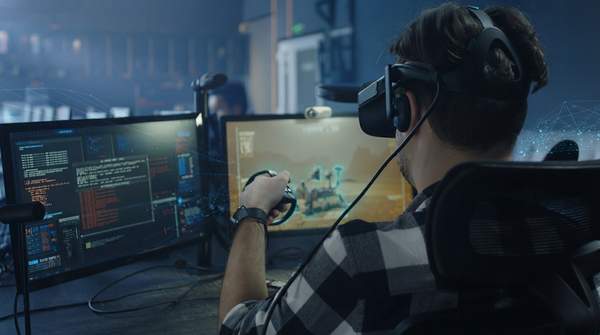
LASALLE College of the Arts announced on 16 November 2026 that it has opened applications for two new artificial intelligence degree programmes, with the first student cohort scheduled to begin their studies in August 2027. The two degrees sit at opposite ends of the creative pipeline: an undergraduate programme for people who want to make things, and a postgraduate programme for people who want to make sense of things. Almost immediately, the announcement drew sharp criticism from students, alumni, and online commentators who fear generative AI devalues human artistry and threatens artists' livelihoods.
LASALLE Launches New AI Degrees Amidst Creative Community Backlash
The announcement covers two distinct qualifications: the BA (Hons) Creative Media Arts: Immersive and Interdisciplinary AI Practices, and the MA Cultural Analytics and AI. Both will take their first intake in August 2027, meaning the first students will not walk into a classroom for months yet — but the debate over their existence has already started.
DANAMIC's report on the launch framed the school's pitch in blunt terms for anyone eyeing a creative career in Singapore while wondering whether a machine will take their future job: learn to drive the tool yourself, and learn when to leave it switched off. That framing captures the school's positioning of AI as something future creative professionals must command, not merely avoid.
The reaction, however, was far from uniformly welcoming. Mothership's reporting on the undergraduate course noted that the announcement received significant backlash from students and alumni, many of whom are opposed to the use of generative AI in art altogether. A Threads post by Singapore media outlet Plan B summarised the online mood more sharply, recording criticism that called the programme "embarrassing" and an "insult" to creativity.
Why the strong reaction? Because the two programmes represent a prominent arts institution formally embedding AI into its degree structure — a signal to the creative community about what art education is becoming, and what the school believes future creative work will require.
Two Distinct Pathways: Creation vs. Analysis
The clearest way to understand the announcement is to place the two degrees side by side. They are not competing programmes — they serve different kinds of people at different stages of their education, and LASALLE's own descriptions make the split explicit.
The undergraduate degree is the "maker" track. LASALLE describes it as approaching technology as a creative tool and a subject of critical inquiry, empowering students to experiment across creative disciplines and identities and to integrate technology on their own terms. In short: hands-on creation, with AI in the toolkit but not necessarily in charge.
The postgraduate degree is the "analyst" track — and it is described in far more expansive terms. LASALLE calls it a "first-of-its-kind programme designed for the next generation of creative leaders," bridging the gap between advanced data science and the arts. Rather than teaching students how to use technology, the school says it empowers them to treat data and AI as "a new language for storytelling, cultural preservation and creative innovation."
LASALLE's New AI Degrees: A Comparative Overview
The table below juxtaposes the stated goals, target audience, and core focus of each programme, drawn from official announcements and reporting on the launch. Prospective students can use it to match a programme to their educational level and career direction — and industry observers can see how deliberately the school has separated the two pathways.
| Dimension | BA (Hons) Creative Media Arts: Immersive and Interdisciplinary AI Practices | MA Cultural Analytics and AI |
|---|---|---|
| Degree level | Undergraduate Bachelor of Arts (Honours) | Postgraduate Master of Arts |
| Core focus | Technology as a creative tool and subject of critical inquiry; experimenting across creative disciplines and identities, integrating technology on the student's own terms | Data and AI as "a new language for storytelling, cultural preservation and creative innovation"; measuring cultural impact and bridging data science with the arts |
| Target student | "People who want to make things" — those seeking to build creative practices with and around AI | "The next generation of creative leaders," including creative strategists and policymakers who understand both computational methodologies and contemporary culture |
| First intake | August 2027 | August 2027 |
The split is deliberate, and the descriptions reinforce it. The BA trains makers; the MA trains analysts and leaders. The MA's promotional material goes further still, describing graduates as "agile, ethical leaders" equipped for the global creative economy, working with live briefs, international datasets, and high-profile research networks — including research connected to LASALLE's Culture Futures Lab, aimed at helping creative strategists and policymakers pinpoint emerging areas of crisis and structural industry gaps. The MA presumes a prior degree; the BA does not.
LASALLE's Rationale: A 'Proactive Response' to Industry Evolution
LASALLE has not stayed silent in the face of criticism. The school has defended the new programmes as a "proactive response" to an evolving media industry — not, it insists, a surrender of creative values to automation.
According to Mothership's reporting of the school's statements, the undergraduate programme's development began two years ago and involved "extensive consultation" with academics, students, and industry professionals. That timeline matters: the degrees were in planning well before the current wave of public backlash, and were built on feedback the school says it gathered across its community.
What did that consultation reveal? A "pressing need" for students who can work across disciplines, technologies, and evolving production environments "while remaining authentic and true to their practice," according to the school. The stated aim is for students to be prepared for the media sector while "remaining true to their creative process and adept at developing yet-to-be-defined creative practices."
The MA's official description completes the picture. LASALLE argues that in an era where AI is transforming every industry, the creative sector needs more than just technicians — "it needs visionaries who understand the pulse of culture." That is the school's core justification: these degrees exist to produce people who can direct the technology, guided by human judgement, rather than be displaced by it.
The Creative Community's Concerns: Devaluation and Threat to Livelihoods
The criticism comes from several directions at once, and it goes beyond harsh words. Mothership reported significant backlash from students and alumni specifically opposed to generative AI in art — the very people who have invested in, or graduated from, a human-centred arts education.
Plan B's summary of the online reaction captured the emotional register: some called the new programme "embarrassing" and an "insult" to creativity. That is language usually reserved for perceived betrayals of principle, not ordinary curriculum debates.
Beneath the strong words sits a recurring economic concern. Commentators raised fears that AI could threaten artists' livelihoods and further sideline human creatives — a worry that an arts institution legitimising AI could accelerate the displacement of the very practitioners it exists to train. Read together, the objections are about both what art is and whether artists can keep working.
Navigating the Debate: What This Means for Prospective Students
For a prospective student, the debate is not an obstacle to ignore — it is part of the decision. The school frames the degrees as future-proofing creative careers through a consultative, human-centric design. Critics see a public institution endorsing tools they believe erode the value of human artistry. Both positions are on the record; neither has been vindicated.
The practical questions are concrete. Are you a maker who wants to integrate AI on your own creative terms, at undergraduate level? The BA is the relevant pathway. Do you already hold a degree, and want to analyse culture, measure impact, curate digital heritage, or shape strategy and policy? The MA is described for exactly that profile — and it presumes both a prior qualification and comfort with computational methods.
What the evidence does not settle is which prediction is right. LASALLE's stated need for these graduates may prove accurate, or the backlash may reflect a real mismatch between what the market rewards and what human artists need to survive. The current record presents both perspectives without a verdict.
Forming an Informed Opinion on AI in Arts Education
Prospective students and creative professionals should critically evaluate LASALLE's new AI degree programmes by weighing the institution's rationale for future-proofing creative skills against the community's concerns about the devaluation of human artistry. The measurable indicator to watch is clear: monitor future enrollment figures for both programmes and ongoing public discourse or industry reports on the employment outcomes of graduates from these or similar AI-focused arts programmes. The first meaningful data point arrives with the August 2027 intake — how many students enrol, what they say about the experience, and whether graduates of AI-focused arts programmes find creative-sector work afterward.
Sources
- LASALLE Opens Two AI Degrees, One to Make and One to Analyse — DANAMIC
- Lasalle's new AI-focused course draws flak, school says it's a 'proactive response' to evolving media industry — Mothership
- MA Cultural Analytics and AI — LASALLE
- MA in Cultural Analytics and AI | Redefining Leadership in Asia's Creative Industries — Grincheva