By creating a virtual replica of a business process, known as a process twin, organizations can simulate, test, and refine Robotic Process Automation (RPA) workflows in a risk-free environment. This digital twin approach allows for the identification of potential shortcomings and the optimization of software bots before they are deployed into live operational systems. The technology creates a dynamic model that mirrors a real-world process, enabling comprehensive analysis without disrupting actual business activities.
Understanding the Process Twin for RPA
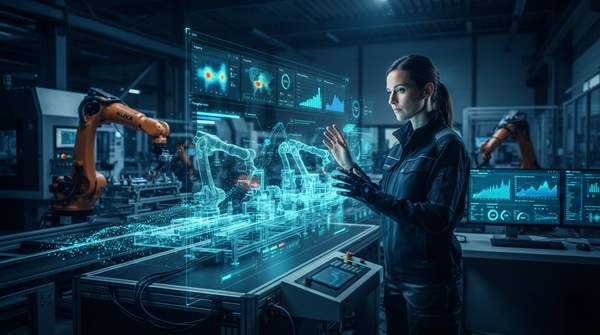
A digital twin is a virtual representation of a physical asset, system, or process that stays connected through real-time data. While often associated with manufacturing equipment or entire factories, the concept extends to software-based workflows through what is known as a process twin. This is not merely a static simulation, which typically mimics a system for design or training purposes. Instead, a process twin is designed to model the entire lifecycle of a business process, from its initial design and operation through subsequent changes and modifications.
In the context of Robotic Process Automation, a process twin creates a dynamic, virtual environment that replicates the applications, data inputs, and decision logic an RPA bot will encounter. RPA software is designed to record the details of repetitive human tasks and then replicate them with minimal intervention. The process twin provides a sandbox where these automated routines can be executed and studied, offering a complete picture of how the bot will perform under various conditions before it interacts with live, customer-facing, or mission-critical systems.
How Digital Twin Simulation Enhances RPA Workflows
The primary function of a digital twin in an RPA context is to enable robust pre-deployment testing and optimization. By building a simulation of a specific business process, developers and business leaders can rigorously study the automation and identify potential points of failure or inefficiency. This method allows teams to observe how an RPA bot interacts with different applications, handles data exceptions, and follows programmed rules without consequence to the actual production environment. The insights gained from these simulations are then used to refine the bot's programming and logic for improved performance.
This approach, often called virtual commissioning, allows for comprehensive testing and validation before any final automation designs are approved for deployment. According to Josh Carlson, a technical product manager for robotics and automation at Siemens Digital Industries Software, a comprehensive digital twin allows manufacturers to "validate systems before building the physical system to improve production quality and reduce downtime." While his comment refers to manufacturing, the principle directly applies to deploying RPA bots, where validating the software system before it goes live is critical to preventing operational errors and costly rework.