Vision-Language-Action (VLA) models are the architecture currently driving the shift of robotic manipulation out of the structured laboratory and into unstructured environments. A survey of the field published on arXiv describes them as a transformative step toward unified multi-modal intelligence, one that overcomes the long-standing limitation of treating vision, language, and action as separate domains. In practical terms, a VLA model is a single transformer-based network that ingests camera images and a natural-language instruction, processes both as tokens, and outputs action tokens that are decoded into robot motor commands. This article explains that architecture, names the landmark models that define the field, and identifies the obstacles that still separate research prototypes from dependable real-world systems.
The Unified Architecture of VLA Models
The defining move of the VLA paradigm is unification. Earlier robotic systems chained together isolated modules: a perception stack that recognized objects, a planning module that reasoned about goals, and a controller that executed trajectories. According to the arXiv survey, early VLA approaches achieved integration by extending vision-language models to include action tokens, which it defines as numerical or symbolic representations of robot motor commands, allowing the model to learn from paired vision, language, and trajectory data. That methodological innovation, the survey reports, dramatically improved robots' ability to generalize to unseen objects, interpret novel language commands, and perform multi-step reasoning in unstructured environments.
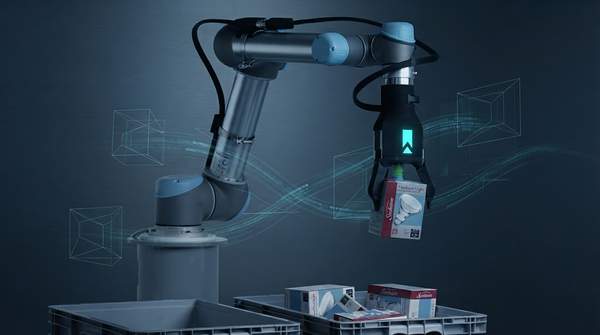
A technical guide aimed at robotics engineers and AI researchers, cataloged by Google Books, frames the same architecture in engineering terms: transformers that integrate multi-modal vision, language tokens, and high-frequency action generation. The consequence is that perception, language understanding, and control are no longer separate engineering problems with separate interfaces, but a single learned mapping from observation and instruction to movement. A logistics example from Roboflow's technical writing on AI in robotics illustrates the payoff: a robot asked to "organize the returned items by category and condition" must interpret the instruction through natural language processing, identify objects and assess their condition through computer vision, and apply learned manipulation skills to handle different item types, all within one coordinated operation that traditional automation could not support.