Specialized Edge AI processors are fundamentally transforming industrial automation by enabling low-latency, on-device inference for critical applications. Unlike traditional cloud-based AI, which relies on data transmission to remote servers, Edge AI processes data locally on devices. This architectural shift is crucial for industrial environments where real-time decision-making, enhanced security, and operational efficiency are paramount.
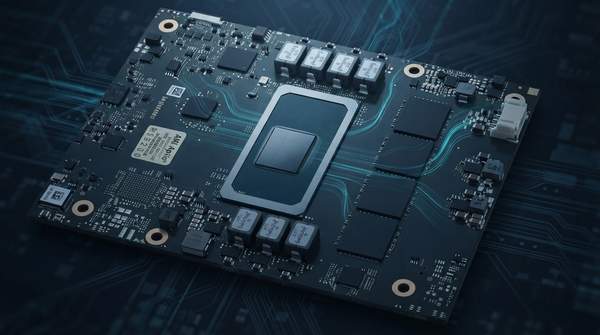
Industrial engineers and automation specialists must understand the distinct architectural advantages of various Edge AI processor types, such as Neural Processing Units (NPUs), Field-Programmable Gate Arrays (FPGAs), and Microcontrollers (MCUs) with accelerators. These specialized devices offer significant benefits over general-purpose Central Processing Units (CPUs) and cloud AI, particularly in their ability to handle neural network workloads efficiently at the industrial edge.
The Imperative of Edge AI in Industrial Automation
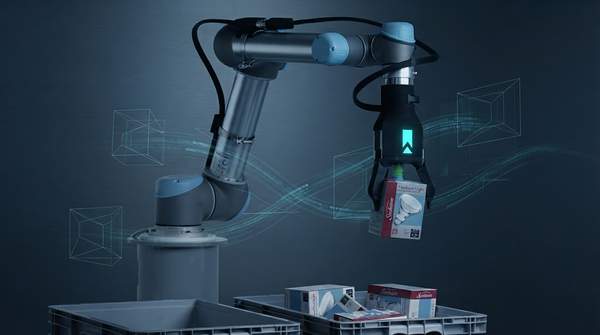
The fourth industrial revolution is increasingly embedding artificial intelligence (AI) and machine learning (ML) across the industrial edge, guiding robots, managing predictive maintenance, and optimizing energy use. This foundational shift towards flexible, AI-ready, and energy-efficient compute demands a departure from traditional compute architectures, which were not designed for the high-volume, low-variation tasks now common in industrial settings.
Edge AI addresses critical limitations inherent in cloud-centric AI deployments. Processing data locally on the device minimizes latency, which is essential for real-time industrial applications where immediate responses are required. This local processing also reduces the need for constant data transmission to cloud servers, thereby decreasing bandwidth usage and enhancing data privacy and security by limiting exposure to potential breaches.
While cloud AI offers scalability and centralized management, Edge AI provides real-time, secure, and cost-effective solutions for applications demanding low latency and improved data privacy. The Arm architecture, for instance, is gaining traction among industrial Original Equipment Manufacturers (OEMs) due to its focus on AI acceleration, power efficiency, real-time performance, and software portability. Siemens AG, for example, is committed to leveraging AI in edge applications, with Herbert Taucher, Head of Research and Pre-Development for IC and Electronics, noting that Armv9-based edge AI platforms will extend their portfolio of secure, performant, and energy-efficient AI innovation.