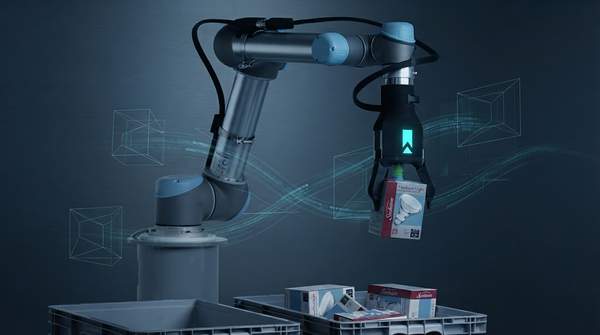
For many small businesses, the daily grind involves countless hours spent on repetitive, manual tasks—from processing invoices to updating customer records. Robotic Process Automation (RPA) offers a practical solution, using software to handle these routine digital chores, thereby increasing efficiency and cutting operational costs. This technology employs software "bots" to mimic how people interact with applications for processes like data entry, transaction processing, and managing emails. By automating these rule-based activities, small business owners can free up their teams to focus on more strategic work that requires human insight and creativity.
What is Robotic Process Automation (RPA)?
Robotic Process Automation is a technology that allows businesses to configure software robots, or "bots," to handle repetitive tasks within digital systems. According to Google Cloud, these bots replicate human actions by interacting with applications and systems just as a person would. Imagine a bot that can open an email, extract an attached invoice, copy the data into your accounting software, and then file the original email—all without human intervention. This is the core of RPA: automating high-volume, rule-based business processes.
It's important to distinguish these software bots from physical robots or advanced artificial intelligence. RPA bots follow a predefined set of instructions to execute a process. As IBM explains, this form of automation uses rule-based software, meaning it excels at tasks with clear, unchanging steps. While some modern RPA tools are expanding to include intelligent automation (IA) for more complex scenarios, the fundamental value for a small business lies in its ability to take over predictable, mundane digital work. This allows employees to be reallocated from tedious data entry to tasks that require more complex problem-solving and customer interaction.
Why RPA Matters for Small Businesses: Key Benefits
In a competitive landscape, small businesses must constantly seek ways to improve operations and manage resources effectively. An article by Monu Kumar for Auxiliobits highlights that because smaller companies typically operate with limited resources, "efficiency and cost-effectiveness are vitally important to their survival and expansion." RPA directly addresses these core needs by delivering several key advantages tailored to a resource-constrained environment.
The most immediate benefit is significant cost savings. RPA helps businesses reduce operational costs that would otherwise be spent on manual labor for repetitive tasks, according to Auxiliobits. Technology provider UiPath further details that automation lowers the expense of rework caused by human error, cuts down on the time and money spent training staff on routine procedures, and allows a business to scale its operations to meet higher demand without needing to increase its headcount proportionally.
Beyond savings, RPA drives major gains in efficiency and accuracy. Bots can complete tasks much faster than a person and can operate 24/7, ensuring processes continue outside of normal business hours. UiPath notes that this leads to standardized, consistent execution that eliminates common data entry errors. This operational improvement also has a positive effect on staff. By removing the high-volume, repetitive workload from a team's plate, IBM suggests that RPA allows people to focus on more strategic and thoughtful decision-making, which can lead to improved employee morale and satisfaction.